
Love God
10-31-2021Weekly Reflection© J. S. Paluch CompanyAs we near the end of the liturgical year we listen to Gospel readings from the final stage of Jesus’ ministry—his teaching in Jerusalem. This Sunday Jesus is in conversation with one of the scribes of the temple. In a rare occurrence Jesus and the scribe agree on the two greatest commandments—to love God with all your being and to love your neighbor as yourself.
READ MORE
Recognizing Jesus
10-24-2021Weekly Reflection© J. S. Paluch CompanyThe star of today’s Gospel is a panhandler. Bartimaeus is blind, yes, but he is probably also homeless and filthy, a real nuisance to respectable citizens. Even so, it is Bartimaeus who recognizes Jesus as the Messiah, places all his faith in him, throws aside everything he has (his cloak), begs him for mercy, receives new vision, and follows Jesus on the way to suffering and death in Jerusalem. How desperate will we have to get before we can do the same?
The Humanity of Jesus Christ
10-17-2021Weekly Reflection© J. S. Paluch CompanyAll three readings today support—each in its own way, of course—a reflection on the humanity of Jesus Christ and how that humanity played a key role in the drama of our salvation. Although not chosen specifically to coordinate with the other two readings, today’s second reading does in fact carry forward the theme of Christ’s humanity in a remarkable way.
READ MORE
Gifts
10-10-2021Weekly Reflection© J. S. Paluch CompanyIn today’s readings, we discover that materialwealth alone does not keep us from discipleship.We will see that there are other gifts more important than material wealth, but even so, it is howwe use our gifts that matters most.
READ MORE
The Barriers that Separate Us
10-03-2021Weekly Reflection© J. S. Paluch CompanyWe live in a society that has many technological avenues for stimulation and entertainment, one in which the urban population exceeds the nonurban. It is curious that loneliness is a prevalent malady. It is easy to reach out and touch someone, we are told.
READ MORE
Proclaim the Wonder of God
09-26-2021Weekly Reflection© J. S. Paluch CompanyThe gift of the Spirit is given freely, not according to human expectations, but according to the generosity of God. Joshua wants Moses to stop Eldad and Medad from prophesying in the camp, when they were not with the others as the spirit was bestowed on them. Moses, so close to God’s mind in the matter, wishes everyone could possess the spirit of God and proclaim it to the nations.
READ MORE
The Meaning of Discipleship
09-19-2021Weekly Reflection© J. S. Paluch CompanyThe geography of today’s Gospel is significant. Jesus is completing his ministry in Galilee and beginning his journey to Jerusalem, where he will meet both death and resurrection. The prediction of his death placed here is the second of three in Mark’s Gospel, and as usual it is the occasion for an important teaching on the part of Jesus. Today that lesson is tied to the need for his disciples to embrace a ministry of service. A play on words in Aramaic would have linked the words “child” and “servant,” thus turning Jesus’ gesture of placing a child in their midst into an illustration of his understanding of himself as the Servant of the Lord.
READ MORE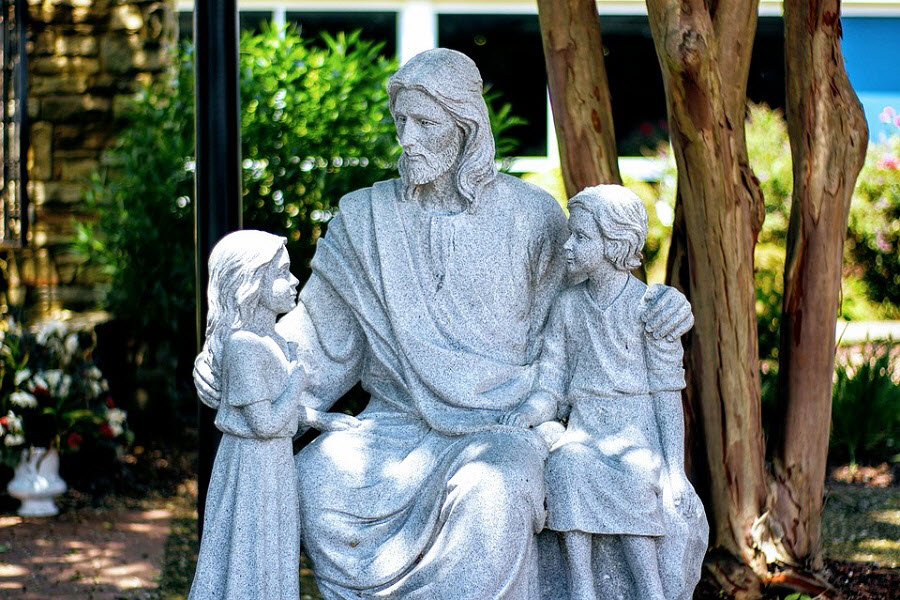
It's All About Control
09-12-2021Weekly Reflection© J. S. Paluch CompanyFrom toddlerhood to old age, we grow in mastery of our own lives, our bodies, and our destiny. This mastery is hard won, and we don’t let go of autonomy easily. Much of this self-mastery involves the avoidance of pain or discomfort, so when we hear things like “take up your cross” and “lose your life,” we tend to resist the message.
READ MORE
Remembering
09-05-2021Weekly Reflection© J. S. Paluch CompanyWhen Jesus broke the bread on the night before he died, he told his disciples, “do this in memory of me” (Luke 22:19). Christians have been faithful to that solemn command. Our eucharistic remembering is not nostalgia, nor is it merely historical, recalling events and facts of long ago. In the liturgy, remembering is action. “Do this,” Jesus said. In the Eucharist, we remember by doing. And as we remember, the sacrifice of Jesus is renewed, truly made present, no longer then, but now.
READ MORE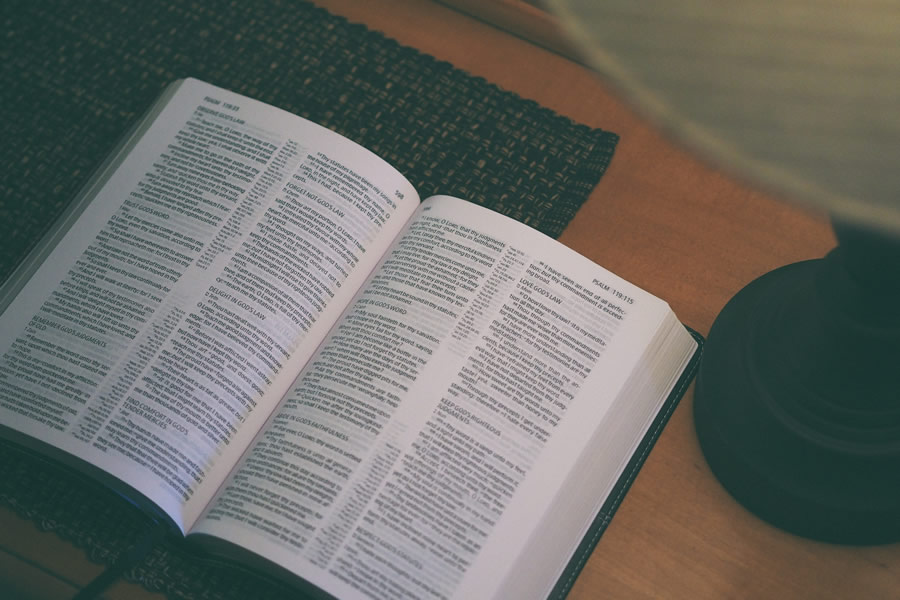
Doers of the Word
08-29-2021Weekly Reflection© J. S. Paluch CompanyThe second reading for today begins a five week series of selections from James, a letter that is classified among the so-called “catholic” (or universal) epistles because they are addressed to a general audience rather than to one particular community. Today’s text offers important advice for Christians of every generation. God is first cited as the author of all gifts, and in particular, reference is made to the gift of baptism by which we have been made the “first fruits” of the new creation.
READ MORE
Decisions
08-22-2021Weekly Reflection© J. S. Paluch CompanyThere is an axiom that states, “Not to decide is to decide.” This saying was popular in the turbulent times of the Vietnam War. It urged us not to allow others to answer the moral questions raised by our nation’s involvement in that terrible conflict, but to decide for ourselves.
READ MORE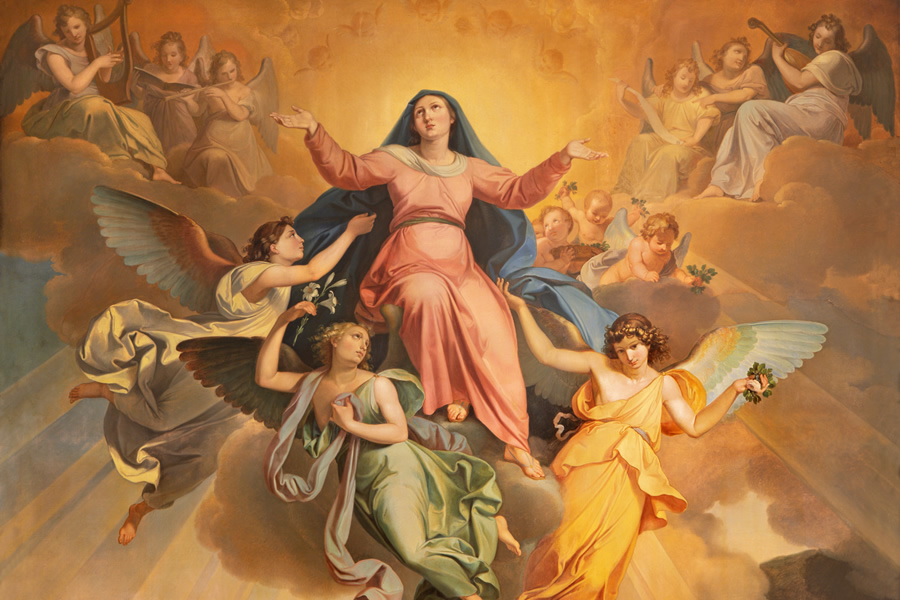
The Destiny of All Mortal Flesh
08-15-2021Weekly Reflection© J. S. Paluch CompanyThe celebration of today’s feast on a Sunday is unusual on our Roman Catholic calendar. Our observance of the Lord’s Day is held in such high esteem that few other feasts replace it. Occasionally there is a feast—usually of one of the saints—in which the saving power of God in Christ is so uniquely focused that the Roman rite deems it worthy of celebration on the Lord’s Day.
READ MORECivil Discourse
08-08-2021Weekly Reflection© J. S. Paluch Company“Do not grieve the Holy Spirit of God.” These words bring us up short! What could we be doing to grieve the Holy Spirit? Alas, the same things that the Ephesians were doing in the time of Paul, that is, fighting, shouting, reviling each other with fury, anger, and malice.
READ MORE
The Bread of Life
08-01-2021Weekly Reflection© J. S. Paluch CompanyToday’s Gospel has the crowd asking Jesus three questions. First, “When did you get here,” to which Jesus responds by rebuking them for their failure to grasp his miracle as a “sign,” an occasion to put faith in him. Their second question about accomplishing the “works of God” has Jesus respond that faith is the “work” that God wishes.
READ MORE