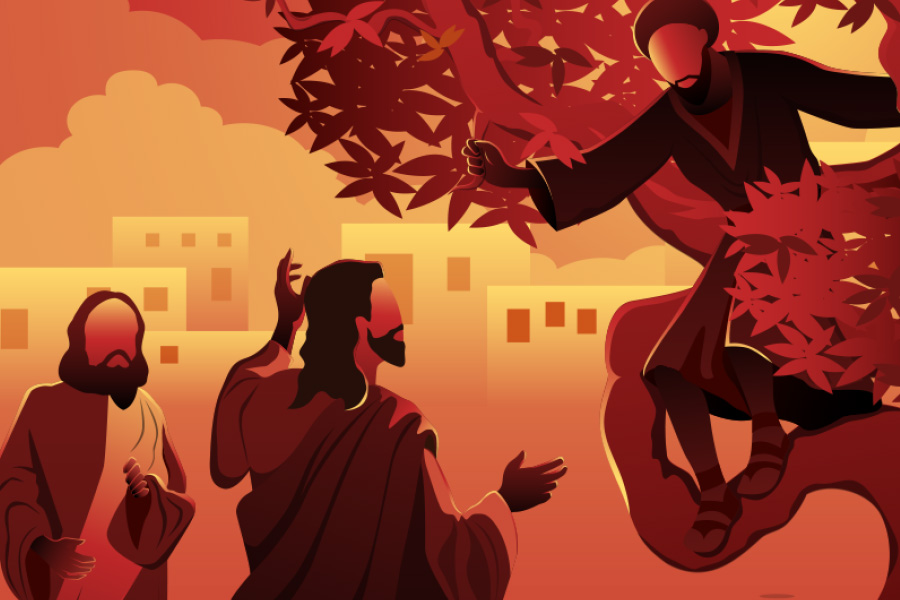
A Compassionate God
10-30-2022Weekly Reflection© J. S. Paluch CompanyToday’s reading from the book of Wisdom presents an image of a patient God who “rebuke[s] offenders little by little” (Wisdom 12:2), an image endorsed by the psalmist, singing of how the LORD is “slow to anger and of great kindness, and com-passionate toward all his works” (Psalm 145:8, 9). The crowd with Jesus, however, grumbles when they see Jesus’s kindness and compassion extended to Zacchaeus, who was not just a tax collector, but the “chief tax collector”-- a title that surely emphasizes his standing as a sinner to be scorned. In the second reading, Saint Paul urges the Thessalonians to be “worthy” of God’s calling, so that “the name of our Lord Jesus may be glorified in you” (2 Thessalonians 1:12); such people, unlike the crowd in the Gospel, would rejoice at Zacchae-us’s determination to change his life after encountering Jesus.
Made Right Before God
10-23-2022Weekly Reflection© J. S. Paluch CompanyAlthough the opening lines of today’s first reading claim that the Lord “knows no favorites” (Sirach 35:15) and is “not unduly partial toward the weak” (35:16), the remainder of the passage makes it clear that the Lord does indeed pay special attention to the weak, the oppressed, and the orphans and widows. The psalmist reiterates: “The Lord hears the cry of the poor” (see Psalm 34:18). In the Gospel, Jesus claims that a tax collector is more justified in his prayer for mercy than the Pharisee, whose prayer was an account of his own righteous deeds. Jesus’ point could not have been clearer: tax collectors in the Jewish society of Jesus’ day were not just lowly; they were considered outcasts and cheaters. They collected taxes for the hated Romans and almost certainly collected enough to assure a generous income for themselves. Tax collectors were among society’s outcasts; didn’t this one just admit his own sinfulness? How could a tax collector be “justified” (that is, made right) before God, while the Pharisee was not? Why would God even listen to the prayer of a tax collector? This surely was a surprise, upsetting common assumptions about righteousness.
Persistence
10-16-2022Weekly Reflection© J. S. Paluch CompanyExodus recounts the journey of the Israelites out of slavery in Egypt to the land promised to their ancestors. It was not an easy journey. In to-day’s reading, they are attacked by Amalek and his soldiers, members of one of the peoples who live in the land through which the Israelites are traveling. Moses was on the hilltop with his arms raised to invoke the LORDS’s assistance in the battle below, a powerful illustration of the LORDS’s favor upon Israel. If the soldiers were to lift up their eyes to that hill (see Psalm 121:1), they would be reassured by Moses’s presence and posture. Paul urges the Thessalonians to persist in proclaiming the gospel, and Jesus likewise commends the widow for her persistence in pursuit of the justice due her. Whether they preach or pray, the followers of Jesus need persistence through periods of difficulty.

The Gift of Salvation
10-09-2022Weekly Reflection© J. S. Paluch CompanyNaaman and the leper who returned to Jesus saw God’s hand in their healing. Only through God’s intervention could they have been cured. Through this recognition of God’s presence and action in their lives, they grew in faith. For what are you grateful? Pause for a moment to reflect on all of the blessings in your life. God is the source of these many blessings...life, love, gifts, and so much more. Of all the gifts for which we must be grateful, none is as great, or as astounding, as the gift of salvation offered to us through Jesus Christ. Let this sink in, not only in your mind but in your heart. Like Naaman and the leper who returned, allow yourself to be touched by the immense love of God for you.

The Gift of Faith
10-02-2022Weekly Reflection© J. S. Paluch CompanyFaith is a gift. When the disciples asked Jesus to increase their faith, they were going to the source of that faith with their request. God is the giver of all good gifts, including faith. When we put our faith in Christ, we believe that God is with us, even though we cannot physically see God. Or can we? If we are attentive, we see the evidence of God’s presence in the love of family and friends, care poured out in service of our neighbors, the living beauty of creation. This is not blind faith, but rather is the result of seeing with the eyes of faith. Followers of Jesus look beyond what is apparent to see what is possiblewith the power and presence of the Holy Spirit within and among us.

Care For Each Other
09-25-2022Weekly Reflection© J. S. Paluch CompanyDon’t delude yourselves, Jesus says through the parable of the rich man and Lazarus. We really are supposed to care for others. It is not enough to go to Mass and occasionally serve at a parish or outreach function. We cannot remain complacent and consider ourselves followers of Jesus. No matter how much or how little material wealth we have, we always have something to give--our time and attention, care, and, when possible, our money. The way we treat and care for others, especially the poor and vulnerable, is the manner in which we show our love of God. As disciples, we must “pursue righteousness, devotion, faith, love, patience, and gentleness.” Jesus calls us to see and respond to the least among us, because, as God’s children, we are all part of one another.

Priorities
09-18-2022Weekly Reflection© J. S. Paluch CompanyMake a choice. God or money, material things, earthly pleasure. This is what Jesus asks us to do in today’s Gospel. The Pharisees and scribes, and many people, want it both ways. God and wealth. But Jesus knows that “no servant can serve two masters.” It is not that wealth is inherently bad, but the pursuit of it to the exclusion of what is good and righteous is. Our faith is meant to guide and shape the way we live. If we are followers of Jesus Christ, we will treat others, especially the poor and vulnerable, fairly and justly. We will live with devotion to God and let our lives speak the truth of God’s love for all. We will put first things first, or more precisely, put God and God’s ways first, assured that when we do, everything else will fall into place.

Relying on God's Love
09-11-2022Weekly Reflection© J. S. Paluch CompanyImagine being among those who heard Jesus address the Pharisees and scribes in the encounter we hear in today’s Gospel: “What man among you having a hundred sheep and losing one of them would not leave the ninety-nine in the desert and go after the lost one until he finds it?” Would you leave ninety-nine in the desert in order to find one lost sheep? In the parable, Jesus is showing us the depths of God’s love, the illogical, incredible love God has for each of us. Moses counted on this loving mercy as he spoke for the wandering peo-ple; Saint Paul acknowledges his reliance on it in his letter to Timothy. God desires to draw you close, seeking you when you are lost. Are you ready to be drawn into God’s loving embrace?

Humility
08-26-2022Weekly Reflection© J. S. Paluch CompanyToday’s readings praise the virtue of humility and offer concrete ways for us to become more humble. The Book of Sirach suggests a practical reason for acting with humility: humble people are more likeable than the arrogant. Even God “finds favor” with those who humble themselves. In Luke’s Gospel, Jesus provides real-world suggestions for growing in humility and teaches us never to assume we are better than others. His words change our outward behavior and expand our hearts and minds to care about people we might have dismissed before. This practical, almost “folksy” wisdom about humility helps us behave better in daily life and makes our lofty goal of eternal life more accessible. Our reading from Hebrews affirms that heaven is indeed approachable. The personal love and sacrifice of Jesus have opened “the city of the living God” to us. Humility prepares us for paradise.

God's People Gather
08-21-2022Weekly Reflection© J. S. Paluch CompanyOur readings today remind us of the larger story of the Bible, of God’s purposes and promises for the world. Because of humanity’s rejection of God, as told in Genesis, human communities were first dispersed. Isaiah proclaims that one day God will gather these communities to be healed and reconciled with God. In Luke’s Gospel, Jesus echoes Isaiah and teaches that all peoples in God’s promised future “will recline at table in the kingdom of God.” Notice that in Isaiah, the nations coming to God do not lose their ethnicity or unique identity. They bring their own distinct cultural gifts to God’s table. Each people has its unique history with God, has received distinct blessings from God, and each is accountable to God. Today, we live in a global and multi-cultural Church. When God’s diverse peoples gather in worship today, may we honor and celebrate each other’s gifts and blessings.
The Voice of the Prophets
08-14-2022Weekly Reflection© J. S. Paluch CompanyWe reflect upon the voice of the prophet in this Sunday’s readings. We hear of the suffering and the rescue of Jeremiah. We hear how Jesus anticipates his suffering and death. As with Jeremiah and Jesus, the prophets were sent by God to the leaders and people of Israel. A prophet is one who speaks truth to the powerful, exposing their darker hidden motives and injustices. The prophet presents a way forward that aligns with God’s purposes. A prophet can force people away from a comfortable neutrality or indifference. The prophet creates an urgency to make a choice: Are we content with the status quo, or are we to changeour ways and pursue a new and better path? Today, we may also ask, how do we identify and respond to prophets of our time? How might we provide a prophetic voice in our Church and in our world?

Faith
08-07-2022Weekly Reflection© J. S. Paluch CompanyOur readings today explore how faith begins and how faith works. Faith begins with God’s initiative of love, together with God’s promise about the future. The passage from Hebrews urges readers to have an assured confidence in God, who promised and delivered a lasting legacy to Abraham. The book of Wisdom reminds readers of the God who promised and delivered freedom from slavery during the Exodus. In the Gospel passage from Luke, Jesus begins with the promise that “your Father is pleased to give you the Kingdom,” before describing how to live faithfully during times when God seems absent. God’s promises mean that God is fully invested in our future. Living in these promises, we can confidently let go of fear and insecurity. We can anticipate that when God intervenes in our lives, it will be for our benefit. And we can become God’s partners in fulfilling these divine promises.