The Center of a Meaningful Life
07-29-2022Weekly Reflection© J. S. Paluch CompanyToday’s readings invite us to reflect upon some of life’s deepest questions, and to explore the meaning of faith. We hear of the universal human search for meaning in our lives in the book of Ecclesiastes. In Luke’s Gospel, we hear Jesus’ parable about one who foolishly seeks ultimate security through the accumulation of wealth. In Colossians, faith in the crucified and resurrected Christ is proclaimed as the path to a richly purposeful and meaningful life. The path of Christian faith places our work, our sufferings, and our limitations within the larger picture of God’s purposes for all of us. In Jesus, God is revealed as our com-panion in human suffering and limitation. God’s love is at the center of a meaningful life. We place our trust in this loving God, who created us to share in this love, and to share this love with others.

Conversations with God
07-22-2022Weekly Reflection© J. S. Paluch CompanyPrayer is our focus this weekend. In the Gospel, Jesus gives his disciples, and us, the Lord’s Prayer, which we have cherished through the centuries. The first two words encompass much about our faith--unity among all Christians (Our), and a sense that we are in a deeply bonded relationship with God (Father).
In Genesis, we see Abraham in conversational prayer, in his creaturely humility before his Creator, seeking mercy and compassion for the innocent. The psalm is a lyrical prayer of thanksgiving and praise for the God who answered the sincere prayers of a people who had called out for help, showing them mercy. In Luke’s Gospel, the disciples want to pray like Jesus, with the same intimacy--to experience God as Abba in the depths of their being.
Do we try to talk to God? Do we listen for an-swers? This relationship is always a work in progress.
Prayer and Service
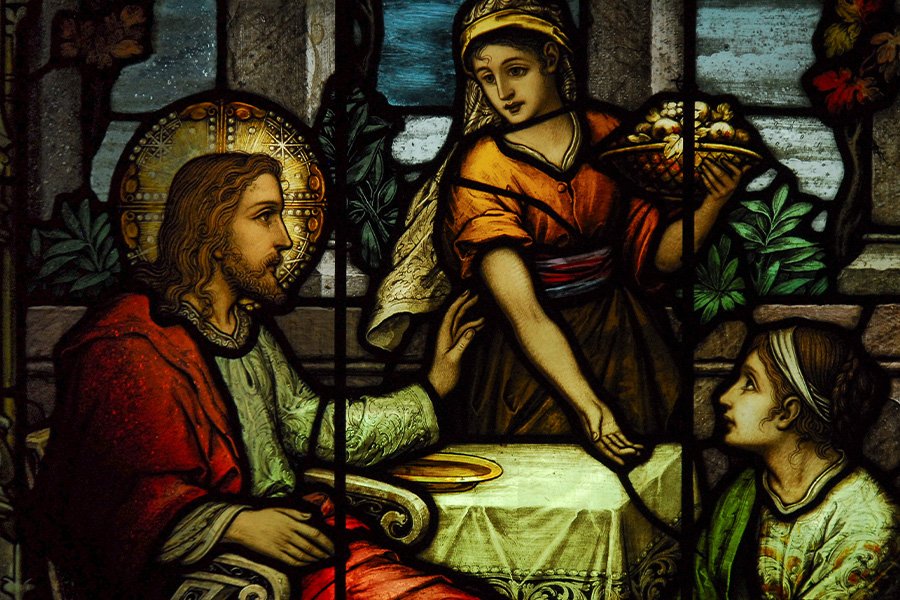
07-17-2022Weekly Reflection© J. S. Paluch CompanyHow do we bring balance and joy to our lives of prayer and service to our loving God? In the Gospel today, Jesus tells Martha that her concern about doing the right thing as dictated by Jewish tradition might not be the best use of her energies. Her sister, Mary, who sits in rapt attention at Jesus’ feet, should not be rebuked. Is Jesus trying to show Martha that she needs to make time for her spiritual nourishment?
READ MORE
Right Relationships
07-10-2022Weekly Reflection© J. S. Paluch CompanyOur God is about relationships. In the first reading, Moses reminds the Israelites that the laws, which are already in their hearts, keep them in right relationship with the God who loves them so much that they always find forgiveness. Centu-ries later, along comes Jesus, whom Paul describes to the Colossians as “the image of the invisible God,” the very embodiment of this God of love. In his parable about the good Samaritan, Jesus ex-plains how the law of love overrules the letter of the law. Instead of answering the question “Who is my neighbor?” Jesus demonstrates that it is not about who is worthy of being loved, but rather loving as God loves—about being neighbor, about being the good Samaritan. Jesus wants us to con-tinue his work as images of this God of love by loving all people, even those who seem to be our enemies.

Good News is on the Way
07-03-2022Weekly Reflection© J. S. Paluch CompanyThis week, in the midst of summer, the scriptures greet us with joy, peace, mercy, and more peace! Sounds a little like Advent, doesn’t it? We often associate the prophet Isaiah with that preparatory season, and our first reading rings with such words as exult, comfort, and rejoice. The Israelites had reason to rejoice, for they had returned, come home, to a rebuilt Jerusalem from their exile in Babylon.
READ MOREDiscipleship's Cost
06-26-2022Weekly Reflection© J. S. Paluch CompanyIn today’s first reading, God tells the prophet Elijah to prepare Elisha to succeed him. Succeeding Elijah will be no easy task; he has spent his life facing threats from the kings he has confronted about their infidelity to the God of Israel. The psalm illustrates the emotional and spiritual distress that the prophets’ steadfast faithfulness to God brought them. Paul’s description of the Christian’s freedom from the law as opposed to “the desire of the flesh” puts this struggle at the very heart of Christian identity. The reading from Luke’s Gospel recounts Jesus’ decision to journey toward Jerusalem, where he knows he will meet his earthly fate. Following Jesus--like succeeding Elijah as prophet--will now become more difficult. Unlike his calls to the first disciples, Jesus encounters those who are not ready or are not strong enough to journey with him.

The Gift of the Eucharist
06-17-2022Weekly Reflection© J. S. Paluch CompanyToday we hear how Abram encounters Mel-chizedek, “king of Salem . . . and a priest of God Most High” (Genesis 14:18). Melchizedek appears nowhere else in scripture, but is nonetheless significant. Psalm 110 declares of the great King David, “You are a priest forever, in the line of Melchizedek,” a description later given (in the letter to the Hebrews) to Christ as High Priest. Early Christians saw in Melchizedek’s bread and wine the bread and wine of the Eucharist; Paul’s account of the Last Supper (in today’s second reading) is the oldest one in scripture. In the Gospel, Luke describes Jesus providing bread for a crowd in words similar to Paul’s, words still used by the Church: Jesus takes bread, gives thanks, breaks it. Together, these three readings reveal how Christian priesthood, Christ’s Real Presence, and the call to serve those in need are all found in the gift of the Eucharist.
Biblical Roots for the Trinity
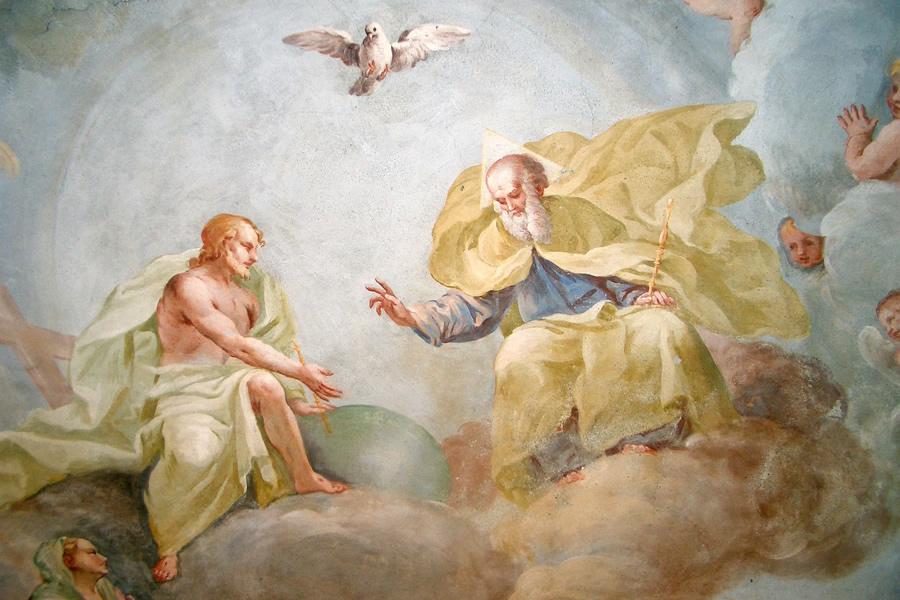
06-12-2022Weekly Reflection© J. S. Paluch CompanyToday’s readings show some biblical roots of what Christians would later call the Trinity. Proverbs showcases the role of Wisdom in the work of creation, portrayed as a reality outside of God but integrated into God’s work of forming the heavens and the earth. We join the psalmist in sharing Wisdom’s delight in God’s handiwork: “O Lord, our God, how wonderful your name in all the earth” (Psalm 8:2). In his letter to the Romans, Paul writes of peace with God through Jesus, and the love of God received through the Holy Spirit, distinguishing God, Jesus, and the Holy Spirit while also displaying their abiding unity. Finally, in the farewell discourse from John’s Gospel, Jesus--who had earlier spoken of himself as Son of the Father -- promises his friends that they will receive the Spirit of truth that will teach and guide them after his departure.

The Spirit’s Active Power
06-05-2022Weekly Reflection© J. S. Paluch CompanyThe mystery of the Trinity refers to one God in three persons. We frequently acknowledge Jesus as “the second person of the Trinity,” but referring also to the Spirit as a “person” comes less natural-ly. In religious art, the Holy Spirit often appears as a dove or, as in today’s reading from the Acts of the Apostles, tongues of fire. Much rarer are imag-es of the Spirit as a “person” in recognizable hu-man form. Today’s readings do not settle the issue of how to picture the Spirit, but they certainly give shape to the Spirit’s active power in the world and in each human heart. In Acts, the Spirit enables people to speak and understand a variety of lan-guages. Paul’s letter to the Corinthians praises the Spirit for all kinds of spiritual gifts, services, and “workings.” Finally, in John’s Gospel, Jesus calls the Spirit our Advocate and our divine teacher.
Sent Forth
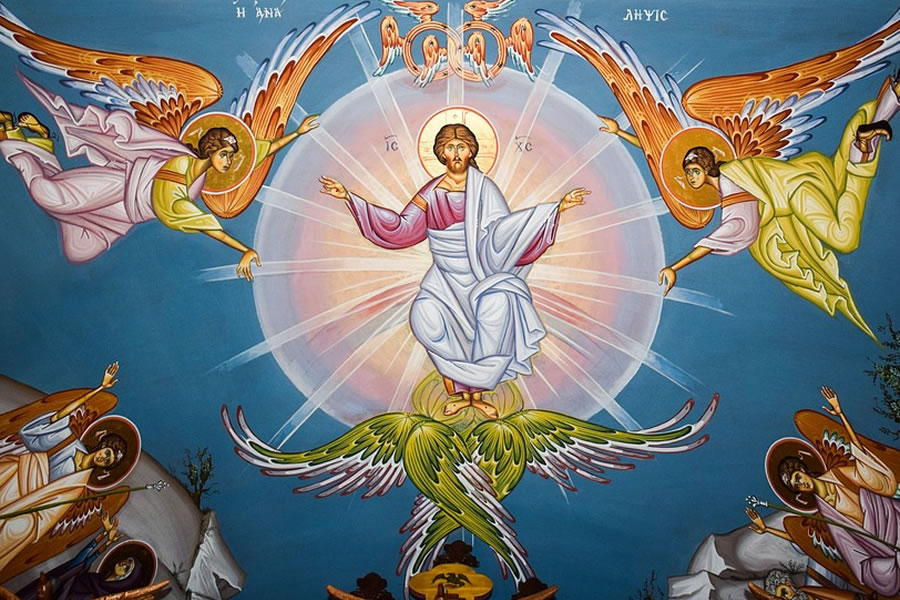
05-29-2022Weekly Reflection© J. S. Paluch CompanyToday we celebrate Jesus’ return to heaven. If we struggle to know how to feel about this event, we take our cue from Jesus’ disciples. These disciples are first-hand witnesses to the Ascension, returning afterword to Jerusalem, where “they were continually in the temple praising God.” Long-time companions of the Lord, they surely feel the pain of physical separation from Jesus. Yet they praise God continually. They accept God’s plan, looking forward to the day when Christ will come again. As our reading from Hebrews affirms, Christ will return to “bring salvation to those who eagerly await him.” This Good News is almost too much to take in; the Acts of the Apostles explains that an angel has to wake the disciples from their stupor, reminding them to start the Lord’s work. Today’s readings are our own angel, sending us forth in joyful hope.
Returning to Ordinary Life
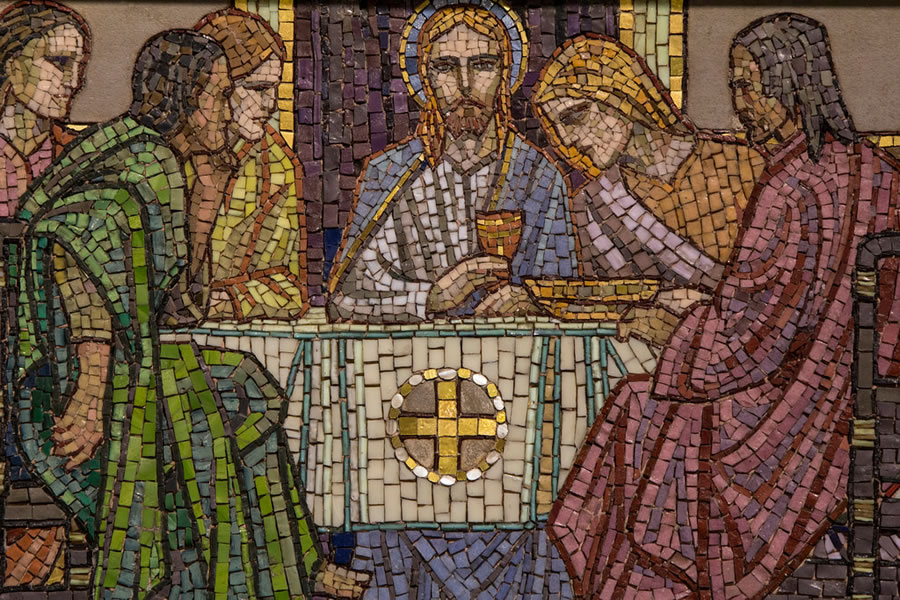
05-22-2022Weekly Reflection© J. S. Paluch CompanySix weeks into our Easter rejoicing, the Church gives us readings today that start pre-paring us for a return to ordinary life. The Acts of the Apostles and the Gospel both dwell on proper daily behavior for followers of Jesus, while the reading from Revelation reminds us why we bother with laws at all. In Acts, leaders of the church meet to discuss which essential elements of the Mosaic Law converts must obey if they wish to be disciples of Jesus Christ. John’s Gospel reflects back to the Last Supper discourse when Jesus himself emphasizes the importance of obeying God’s commandments. Observing God’s law, says Jesus, shows a desire to be intimate with the Lord. We follow rules not for their own sake, but to love God and neighbor better. This more excellent love brings us closer to Revelation’s vision of paradise, gleaming with “the splendor of God.”

Making All Things New
05-15-2022Weekly Reflection© J. S. Paluch CompanyAlthough we are five full weeks into the celebration of Easter, today’s readings focus on newness. Our Easter food leftovers may be long gone, but the readings insist on every moment’s freshness in the risen Jesus. The Acts of the Apostles depicts Paul and Barnabas reflecting on all the innovative work that God has done with them. They have traveled hundreds of miles, introducing faith in Jesus Christ to all who listen, even Gentiles. For the dutiful Jewish scholar Paul, preaching to Gentiles is a completely unique development. Jesus calls Paul, and us, not to be afraid of new challenges: as John the Evangelist reports in Revelation, Jesus promises to “make all things new.” In the Gospel reading, Jesus even gives us a new commandment. The He-brew Scriptures overflow with commandments, but Jesus knows we need one more, perfect mission: “love one another.”

A Foretaste of Paradise
05-08-2022Weekly Reflection© J. S. Paluch CompanyThroughout Easter Time, the Church rejoices with Jesus, risen from the dead. Our readings on this Fourth Sunday of Easter celebrate our instinct to come together in joy, worshiping in church. While private prayer nourishes our individual relationship with the Lord, community prayer is a foretaste of paradise. The book of Revelation depicts a “great multitude” worshiping God “day and night in his temple.” Our churches on Easter Sunday often reflect this happy multitude, filling the pews to bursting. Four Sundays into the festive season, we are encouraged to keep praising God together. In the Acts of the Apostles, Paul and Barnabas demonstrate their instinct to worship with their faith community each Sabbath, dutifully taking their seats in the synagogue. In the Gospel, Jesus calls us his sheep and reminds us why coming together as a flock is so important: uniting in community, we imitate the unity of God.

God’s Overflowing Kindness
05-01-2022Weekly Reflection© J. S. Paluch CompanyThe superabundance of God’s kindness ties all of today’s readings together. Especial-ly when life overwhelms us, the Lord provides all we need, and then some. In the Acts of the Apostles, Peter takes the lead when facing the Sanhedrin. We might expect the man who denied Jesus to crumble under the imposing glare of the high priest. Instead, the Holy Spirit helps him testify to his faith in Jesus Christ. What Peter had lacked before, cour-age and conviction, God provides in abun-dance. Similarly, today’s Gospel shows Jesus providing a surplus of fish for the disciples. They have no luck fishing until the Lord inter-cedes. Jesus supplies an almost ridiculous number of fish, and he cooks it for them, too. As our reading from Revelation affirms, the overflowing riches of God require constant praise. Countless creatures—“everything in the universe”—cry out to honor the Lord, for-ever and ever.